
Zim girls and health rights advocates denounce removal of abortion Clause 11 in Medical Services Bill
February 21, 2026
ITEC building bridges between Zimbabwe and India
March 6, 2026Reclaiming Africa’s future: Insights from contemporary African political thought as Nkrumah’s vision comes to life 40 years down the lane through the AfCFTA
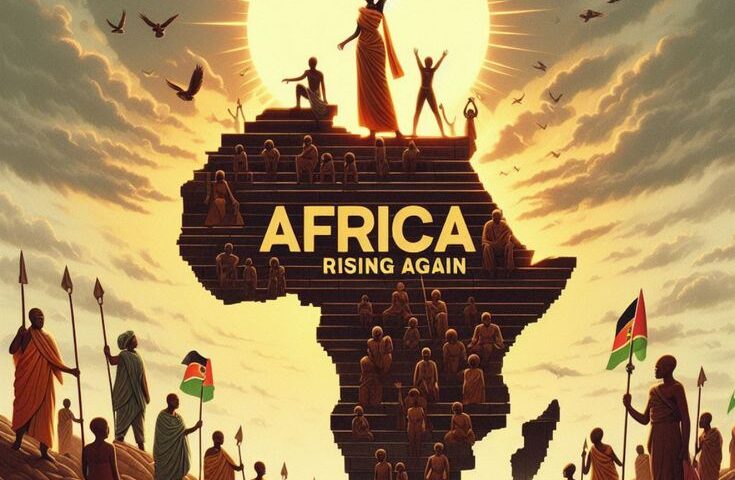
Will the Pan African vision by Kwame Nkrumah come to life through the AfCFTA as loud voices rise for the rebirth of Africa.
By Thobekile Zhou and Anna Elifuraha Kesoi
FROM the Stone Age to the Industrial Revolution and now the Digital era, Africa still stands at a crossroad even after being set free from the shackles of slavery and colonialism, struggling with challenges ranging from economic stagnation to political instability.
However, what is baffling is that in this present-day turmoil, the philosophies of visionary leaders like the late renowned former Ghanaian President and political theorist Kwame Nkrumah still offer a little hope. As the continent looks for sustainable development, it’s imperative to revisit Nkrumah’s philosophies and assess the relevance in addressing Africa’s current challenges.
Nkrumah was famous for his Pan-African vision for the unification of Africa in the socio-economic and political field. The late pan Africanist who passed on in the early 1970s would often say,” We would all be in a better bargaining position to obtain higher prices for our goods and to establish adequate taxation of foreign factor earnings. With economic unity of countries in Africa, we would all be in a bargaining position to establish adequate taxation of foreign factor earnings in a whole new pattern where economic development would be made possible.”
Nkrumah’s ideology mainly focused on Pan-Africanism, advocating for unity and collective self-reliance. He championed the notion of “African Personality,” emphasizing the continent’s unique cultural identity and potential for greatness. Economically, Nkrumah pushed for industrialization and intra-African trade, and this is now being advocated for, 40 years later, under the African Continental Free Trade Area (AfCFTA). His argued that Africa’s resources should drive its own development and economic growth through self-sufficiency.
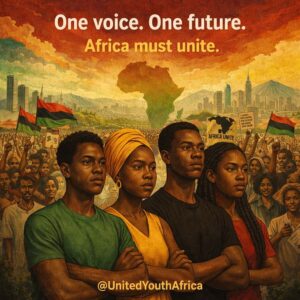
The rising school of thought after Nkrumah 40 years down the lane.
Nkrumah’s vision for economic growth in Africa hinged on state-led industrialization and regional integration. He believed Africa could break free from neo-colonial economic structures by fostering internal markets and value-added production. Ghana’s Volta River Project in the 1960s exemplified this approach, aiming to harness hydroelectric power for industrial development. The historic infrastructure project initiated in the early 1960s in Ghana by President Nkrumah to industrialize the nation through hydroelectric power involved damming the Volta River at Akosombo, creating the world’s largest man-made lake (by surface area) and powering an aluminum smelting industry.
Despite having vast natural resources, present-day, most African states regardless of having attained independence over four decades ago, still face similar struggles which include dependency on imported finished commodities, poor infrastructure and fragmented markets. Nkrumah’s ideas remain relevant present-times as there is regional Integration which the AfCFTA, ever since its establishment in 2018, now echoes to be the backbone of meaningful development in Africa. Established to create a single market for goods and services across 55 African Union (AU) nations, with negotiations launched in 2015, the AfCFTA agreement was finally signed in Kigali, Rwanda on March 21, 2018. The AfCFTA now aims at accelerating intra-African trade and boosting Africa’s trading position in the global market by strengthening Africa’s common voice and policy space in global trade negotiations.
Nkrumah’s call for economic unity, potentially unlocking US$3 trillion in economic activity was not just a clarion call, but 40 years down the lane can now be considered as a prophesy. In the 21 Century there is now notable industrialization as countries like Rwanda are now pushing for developing value addition and beneficiation to develop its local manufacturing industry and Ethiopia’s industrial parks demonstrate the viability of Nkrumah’s strategies.
Self-import substitution and local content policies can reduce Africa’s vulnerability to global price shocks. Nkrumah’s consciencism blended elements of Marxism, Pan-Africanism and traditional African values that emphasized social justice, equality and collective progress as the future of Africa’s rebirth.
He argued that Africa needed a distinct ideological framework to break free from colonial mentalities and foster development. There were other theories on how to develop the continent such as former Tanzanian President Julius Nyerere’s concept of “Ujamaa” (African socialism) that emphasized on community and collective ownership, offering an alternative development model. Samir Amin’s critiques of neo-colonialism highlight the need for Africa to navigate global capitalism strategically whilst Thandabantu Nthenge’s work on African political thought underscores the importance of reclaiming Africa’s narrative.
However, contemporary critics argue that Nkrumah’s model was state-centric and protectionist, leading to inefficiencies. Nonetheless, modern adaptations emphasize public-private partnerships and leveraging global markets strategically. The key lies in balancing self-reliance with international cooperation.
Conclusion
Whilst the vision of Nkrumah in the 1970’s landed on deaf ears with sharp criticism that was also influenced by European countries, his perspectives offer necessary lessons for Africa’s rebirth. By embracing Pan-African unity, industrialization and resource-driven development, the continent can chart a new path to prosperity. The challenge lies in translating these ideas into actionable policies, ensuring that Africa reclaims its narrative and autonomously shapes its future.
Thobekile Zhou and Anna Elifuraha Kesoi are Department of International Relations and Diplomacy students from Africa University. They write in their personal capacity.