
Kush addiction threatens an entire generation in Sierra Leone
March 26, 2026
Clique Pharmacy directors’ wrangle in dramatic ending
April 19, 2026Kwame Nkrumah’s “United States of Africa” vision lingers 60 years on in Africa’s ongoing struggle to advance socio-economic development
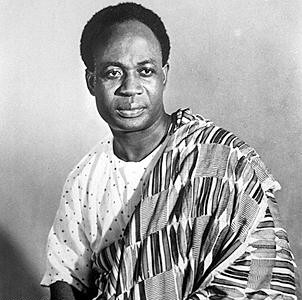
Remembering the late Ghanaian "Father of Pan-Africanism" Kwame Nkrumah 60 years on.
By Shamiso Mubayiwa and Marshall Jambgwa
WHEN the late renowned Ghanaian pan Africanist Kwame Nkrumah led Ghana to independence in 1957, he did more than celebrate the end of colonial rule, but also introduced a bold political vision for the entire African continent. Nkrumah often considered the “Father of Pan-Africanism,” pushed for immediate African independence and a united continent and firmly believed that independence would be useless if African countries remained economically dependent and politically divided.
Nkrumah was the first President of Ghana (1957-1966) and was a founding member of the Organization of African Unity (OAU) in 1963, now called the African Union (AU). He died in exile in Romania on April 27, 1972 after the Ghanaian military overthrew his administration in 1966. However, six decades later, a lot of the challenges Africa faces reflect the very issues he warned about. His ideas remain central to discussions about Africa’s future.
As we remember the month of April as the month “the Father of Pan Africanism” passed on and the month which Zimbabwe attained its independence on 18 April 1980 there is need to look at the visionary introspects of famous Pan-Africanist presidents and leaders that championed continental unity, sovereignty and liberation from colonial rule. Key figures include Nkrumah (Ghana), Julius Nyerere (Tanzania), Robert Mugabe (Zimbabwe), Thomas Sankara (Burkina Faso), Patrice Lumumba (DR Congo), Nelson Mandela (South Africa) Muammar Gaddafi (Libya), Haile Selassie (Ethiopia), Jomo Kenyatta (Kenya), Samora Machel (Mozambique), Ahmed Ben Bella (Algeria) and Sekou Toure (Guinea). They advocated for African self-reliance, anti-imperialism, and often, a United States of Africa.
However, focus will be on Nkrumah. One of his most important contributions to modern African political thought was his theory of neo-colonialism. He argued that colonialism would not completely disappear after independence. Instead, it would return in a different form, through economic control. According to Nkrumah, foreign powers would use trade systems, multinational companies and financial influence to maintain dominance over newly independent states.
Looking at Africa today, this argument still carries weight. Many African economies depend heavily on exporting raw materials such as minerals, oil, and agricultural products, while importing expensive manufactured goods. This trade imbalance limits industrial growth and keeps countries dependent on external markets. In addition, rising debt levels in several African countries have increased reliance on foreign lenders. These realities reflect Nkrumah’s warning that political freedom without economic independence would remain incomplete.
Another key element of Nkrumah’s philosophy was Pan-Africanism. He believed that African unity was essential for real strength and development. In his view, small and divided states would always struggle to compete in a global system dominated by powerful nations. He proposed the idea of a “United States of Africa” where the continent would share political and economic institutions.
Although this full political union was never achieved, African leaders formed the Organisation of African Unity in 1963, which later became the African Union. These institutions promote cooperation among African states, but they do not represent the deep level of integration Nkrumah envisioned. However, recent efforts such as the African Continental Free Trade Area (ACFTA) show movement towards greater economic unity. These initiatives suggest that Nkrumah’s ideas were not unrealistic, but perhaps introduced before Africa was fully prepared.
Despite his visionary ideas, Nkrumah’s leadership also had serious weaknesses. Over time, his government in Ghana became increasingly centralised. The country moved toward a one-party system, and political opposition was limited. This raises important concerns about balancing unity and democracy. Any modern application of Nkrumah’s ideas would need to ensure that strong leadership does not undermine democratic principles and accountability.
Even with these criticisms, Nkrumah’s political thought continues to offer important lessons. Africa’s major challenges — unemployment, poverty, insecurity, corruption, and economic dependency — are interconnected and often cross national borders. Addressing these problems requires cooperation beyond individual states. Greater economic integration, stronger regional institutions, and collective bargaining in global trade negotiations could increase Africa’s influence internationally.
Furthermore, Nkrumah emphasised the importance of psychological and cultural liberation. He believed that colonialism damaged African confidence and identity. Today, discussions about decolonising education, promoting African scholarships and supporting local industries reflect this ongoing effort to redefine Africa’s position in the world. His call for self-determination remains relevant in an era where global systems still favour stronger economies.
Kwame Nkrumah’s political philosophy was ambitious and forward-looking. While not all aspects of his leadership were successful, his core ideas continue to shape debates about Africa’s development. Economic independence, continental unity and self-reliance remain pressing goals for the continent. The persistence of economic vulnerability and political fragmentation suggests that his warnings were not misplaced.
Modern Africa faces complex global challenges, but it also possesses significant resources and potential. Revisiting Nkrumah’s ideas does not require copying them exactly as they were presented in the 1960s. Instead, it requires adapting their principles to today’s realities while protecting democratic values. His vision of a united and economically independent Africa remains unfinished, but it continues to provide a framework for thinking about long-term continental progress.
Shamiso Mubayiwa and Marshall Jambgwa are Department of International Relations and Diplomacy students from Africa University. They write in their personal capacity.