Biti granted temporary exception on surrendering passport to travel abroad by Mutare Magistrates Court
March 24, 2026
Kwame Nkrumah’s “United States of Africa” vision lingers 60 years on in Africa’s ongoing struggle to advance socio-economic development
April 13, 2026Kush addiction threatens an entire generation in Sierra Leone
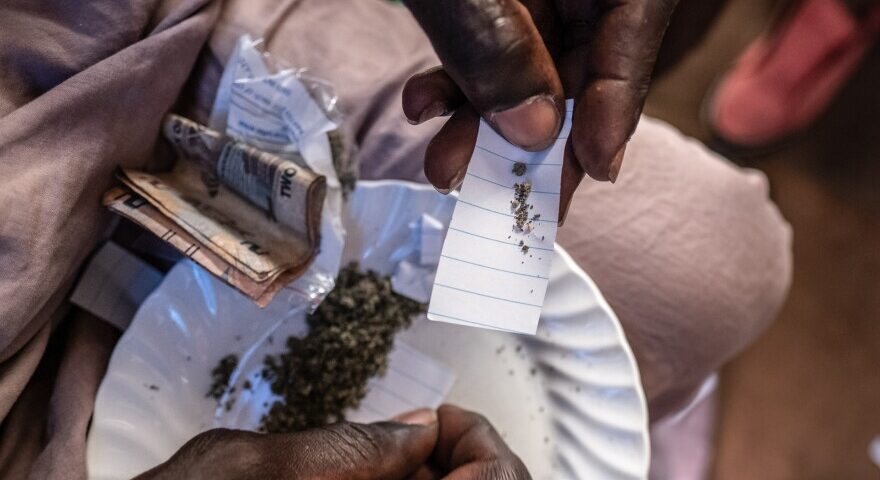
The illegal kush drug is fast destroying young lives in Sierra Leone and more must be done to combat drug and substance abuse in the wake of high unemployment and poverty in the West African country.
By Mariama Sheriff and Christina Georgiana Kamara
JUST two decades after going through a gruesome civil war from 1991 to 2002 and the world’s deadliest Ebola outbreak, a new threat now wreaks havoc in Sierra Leone. Kush, a cheap synthetic illegal drug, is ravaging communities in the West African country.
Police are battling to win the war against the drug. In cities like Freetown, Bo and Kenema also spilling into parts of neighbouring countries, Guinea and Liberia, kush, which is a depressant that is smocked just like marijuana (dagga) is selling fast, destroying many young lives from its severe addiction. Since 2023, it has reportedly taken 900 young lives, leaving many others trapped by addiction from the drug and in time many turn to crime to fund the habit.
Stopping this is not just about law enforcement. What is needed instead are leaders who can think outside the box, like what the late renowned former Tanzanian President Julius Nyerere did when he came up with the idea of Ujamaa, a Swahili word for family-hood and socialism.
The late former President Nyerere came up with the African Socialist Development Policy from the 1960s to the 1980s. It emphasized communal living, self-reliance and cooperative economics to create an egalitarian society often involving the resettlement of people into collective Ujamaa villages.
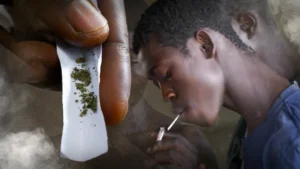
How Kush is wrapped in a paper and smocked like dagga.
Kush unlike illegal herbal drugs smoked such as marijuana is very addictive and sold very cheap. It consists of a mixture of plant material with tramadol, along with unknown chemical blends and synthetic opioids (nitazenes), which are far stronger than heroin. This mix tears apart both mind and body over time. The millions of youths facing challenges of unemployment and lacking meaningful educational opportunities now resort to this as a scape goat to drown their sorrows. According to mental health experts, with widespread poverty and joblessness in Sierra Leone youths quickly turn to illegal drugs and substance abuse because of peer pressure, social isolation and parental guidance absence, forming a drug and substance abuse cycle that spreads rapidly across cities and towns.
Young people in Sierra Leone deal with deep-rooted issues far greater than drug and substance abuse alone. Hope fades where options vanish. It is estimated that around 70% of them cannot find steady work, mainly because job opportunities are scarce and skills training programmes are nearly absent. Without ‘meaningful’ empowerment policies for youths, a sense of exclusion grows, especially when political systems seem distant. Under such pressures, kush use spreads quickly. School dropouts are on the rise, petty crimes become common and families’ breakdown due to the drunken state of living by the children smoking kush as a depressant.
The crisis reveals cracks in how political power operates in Sierra Leone. The Sierra Leone government declared kush a national state of emergency in 2024, but some reports allege that certain high ranking government officials and politicians secretly support drug trafficking and distribution networks, undermining public trust and accountability. The law enforcement is under-resourced and rehabilitation centers are insufficient. The Ministry of Health and Sanitation in Sierra Leone was tasked with establishing a National Task Force on drugs and substance abuse to identify treatment and mitigation measures to combat Kush addiction among affected individuals but again it is under resourced. Kush is no longer just a public health problem, but is now a societal emergency that demands ethical, decisive leadership to nip in the bud the growing epidemic.
Lessons from Julius Nyerere
Out of hardship comes thought. Nyerere’s thinking still fits here. Not through force, but addressing the root cause. His belief in self-reliance takes root. Unity is not shouted, it grows quietly between people who work together. His famous quote, “Dignity hides inside honest effort, not in handouts or escape,” speaks volumes. His philosophy is not old relics- but actually shapes how communities can unite to combat the kush pandemic.
- Building skills start with hands-on learning, so focus should shift to trade or technical education. Young people create businesses when support follows their ideas. Creating employment locally strengthens communities instead of exporting labour. Health tools are built nearby because solutions work better when they come from within.
- Youth feel more connected when they help shape decisions together. Different groups talking openly build common ground over time. Shared projects remind everyone they belong to the same society. When people see themselves reflected in public life, distance shrinks. Trust grows where voices are heard without condition.
- Technical training leads straight to real jobs in mining, farming, care roles, and ICT to mention a few. Hope grows where effort meets opportunity.
With these approaches in place, the risk of addiction drops as communities grow unified and economies gain strength to strength through shared purpose.
The World Cannot Remain Silent
Sierra Leone may seem small, but it carries weight in global markets. Rich in diamonds, gold, bauxite, rutile and iron ore, its underground wealth shapes much of its role abroad. Exports rely heavily on mining, where more than 70% comes from, with diamond shipments influencing how gemstones move around the world. While iron ore and rutile supply factories far beyond its borders, bauxite and gold quietly power parts of building, tech, and energy systems elsewhere. Its resources reach deep into international industry networks.
With the Economic Community of Western States (ECOWAS) as a conguit, Sierra Leone takes part in cross-border commerce, helping strengthen both peace and shared economies. Most of its exported goods, about two-thirds, head to China, while Europe receives roughly one-seventh, India about one-sixteenth, linking it across diverse international networks. Left unaddressed, societal issues such as drug and substance abuse of kush cripples the youths who are the future of the country thus it becomes a national security concern.
The deafening silence on the drug and substance abuse pandemic will have consequences. While eyes turn to war zones like Ukraine and Gaza, Sierra Leone’s unfolding struggle with drugs and substance abuse of kush stays unnoticed. Still, the energy of its young people, combined with natural wealth and position on the map, gives it weight in Africa’s balance and worldwide trade routes. Acting early could block wider breakdowns, social unrest, market strains and power shifts. What slips through cracks today may define tomorrow.
What needs to be done?
Government Actions
In response to the rising kush drug and substance abuse, Sierra Leone President Julius Maada Bio should act fast, treating it like the national crisis he declared, which means financing the country’s Drug Law Enforcement Agency and health institutions by building more drug treatment and rehabilitation centres. There should also be high profile people arrested and not just the small time kush street peddlers. When actions are clear and answers given freely, belief in political leaders grows again.
Social and Community Solutions
Communities must take part in the campaigns. Community leaders from pastors, school heads to mention a few must be tasked and capacitated to do programmes against drug and substance abuse. Addressing the job vacuum is also important to reduce idleness. This includes youth empowerment opportunities through government funded programmes.
International Support
Though global allies offer financial backing, skills development and job-focused education initiatives, there is need to place decision-making power in local hands. Ethical extraction mineral extraction policies ought to be promoted so that young populations benefit from jobs created through local value addition of minerals. To limit kush movement across territories, joint efforts involving Guinea and Liberia become necessary given the porous borders between the neighbouring countries.
From Julius Nyerere’s belief in standing together, working hard and valuing every person’s effort, Sierra Leone must combat the kush epidemic with top priority. Silence won’t do any longer. Because of its young population, land full of rich mineral resources and strategic location, this nation holds weight in keeping West Africa steady and trade moving worldwide. Moments like these call for bold steps forward to safeguard citizens and the future of the nation.
Mariama Sheriff and Christina Georgiana Kamara are students in the Department of International Relations and Diplomacy at Africa University. They write in their personal capacity.

Mariama Sheriff

Christina Georgiana Kamara